

How to
How to wash and dry knitwear properly
A guide to caring for your knitpiece


Before washing
Why knitwear needs special care
A knitpiece is made up of many individual stitches that together form a flexible, movable surface. That is exactly what makes knitwear so comfortable to wear – but it also means it deserves a little more attention when it comes to care.
At Atelier 3K we prefer carefully selected fibres of natural origin. Animal fibres such as wool, merino wool, mohair or silk are particularly sensitive to high heat, friction and sudden temperature changes. If washed too hot or too aggressively, the fine fibres can interlock. The knitpiece may felt, shrink or lose its original shape.
Wash less often
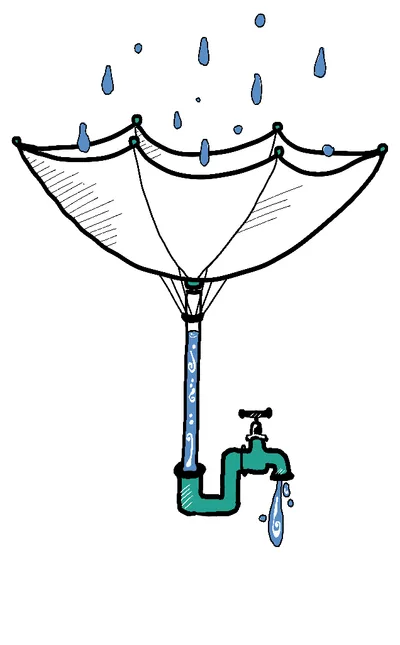
The good news is that wool in particular often needs to be washed far less frequently than you might think. It absorbs odours only slowly, so it is often enough to air your knitpiece for a few hours or overnight in a well-ventilated spot.
Always check the care label
Before washing your knitpiece, it is always worth taking a quick look at the care label. Even if two knitpieces look similar at first glance, their yarns, fibre blends and constructions can differ significantly.
The care instructions on your knitpiece always take precedence over general recommendations. Also check whether the entire piece really needs to be washed. Small stains can often be treated carefully and locally. That protects the fibres and saves water and energy at the same time.
If a full wash is necessary, your knitpiece mainly needs three things: the right temperature, as little friction as possible and gentle handling.
What's inside?
The right detergent
For caring for your knitpiece you should use a mild wool detergent. It is designed for delicate fibres and cleans without unnecessarily stressing their natural structure.
Regular full or colour detergents are often unsuitable for wool and other fine natural fibres. They may contain enzymes, bleaches or other ingredients that attack the fibres over time and can leave the material dry, stiff or brittle.
For caring for our own knitpieces we use Sonett's wool care products – a German company whose approach to conscious, gentle textile care aligns well with our own understanding of Care & Wash.

Less is more
The same applies to detergent: less is more. A small, properly dosed amount is usually completely sufficient. Too much detergent does not automatically clean better and can leave residues in the knitpiece. You should avoid fabric softener and bleach entirely. They can alter the fibres and their natural properties. Use a mild, preferably pH-neutral detergent that is explicitly suitable for wool and delicate textiles.

Our Sonett recommendations
This mild, enzyme- and fragrance-free detergent is ideal for gentle hand and machine washing of wool, silk and cashmere. Organic olive oil soap cleans gently and has nourishing, re-greasing properties. The product also contains purely plant-based surfactants and is free from colourants and preservatives.
Wool Care is not a detergent but a supplementary treatment with natural wool fat. It replenishes lanolin in heavily stressed wool textiles and can be applied occasionally when the material feels drier or stiffer. However, it is not necessary for every wash.
The right wash method
Hand wash or machine wash
Hand washing may sound like the gentlest choice at first – but it is not automatically so. Even when washing by hand, a knitpiece can be unnecessarily stressed by water that is too warm, vigorous rubbing or wringing. A modern wool programme often works very calmly and in a controlled way and can therefore be even gentler.
Whether hand washing or machine washing is the better choice depends on the material, construction and the information on the care label. So here too: check the care label first.
If machine washing is permitted, you can wash your knitpiece on a wool or hand-wash programme. If hand washing is explicitly recommended, you should follow that.
Regardless of the method, low temperatures, little movement and gentle handling are crucial. Wool reacts not only to heat but especially sensitively to the combination of heat, moisture and friction.

Washing your knitpiece in the machine
Temperature and spin speed
If the care label permits machine washing, you can clean your knitpiece on a wool or hand-wash programme. Turn it inside out beforehand and place particularly fine knitpieces in a laundry bag as well. This protects the surface from unnecessary friction. Wash your knitpiece cold or at a maximum of 30 °C and choose a low spin speed of 400 to at most 600 rpm. For especially fine or loosely knitted knitpieces you can reduce the spin speed further or skip spinning entirely.
The load
The drum should not be too full so that the knitpiece is exposed to as little friction as possible. Therefore wash only a few delicate pieces at a time and separate light and dark colours. Close zips, hooks or Velcro before washing. Otherwise they can catch in the stitches and damage fine yarns.
Remove your knitpiece from the machine as soon as possible after the wash cycle. When damp, knitwear is particularly sensitive and should not be left compressed in the drum unnecessarily long.
Our care symbols at a glance

Washing your knitpiece by hand
-
Step 01
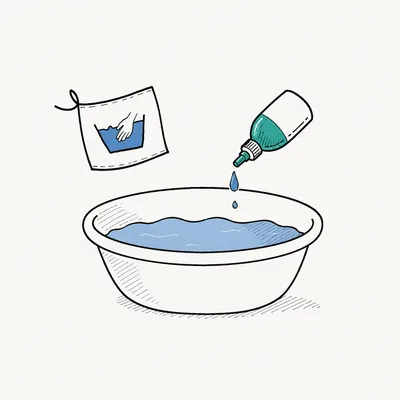
If the care label recommends hand washing, fill a clean sink or large bowl with cold to lukewarm water (max. 30 °C). Add a small amount of wool detergent and dissolve it completely before placing your knitpiece in the water.
-
Step 02
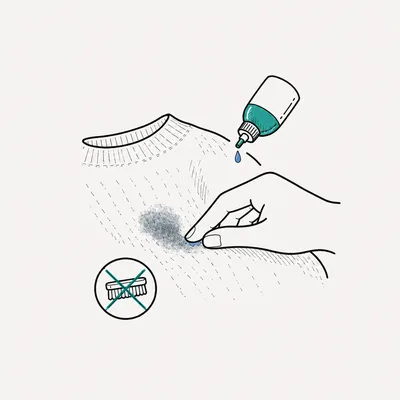
Heavily soiled areas can be dabbed carefully beforehand with a little diluted wool detergent or worked gently with your fingers. Avoid vigorous rubbing or brushing, as this can roughen the fibres or cause felting.
-
Step 03
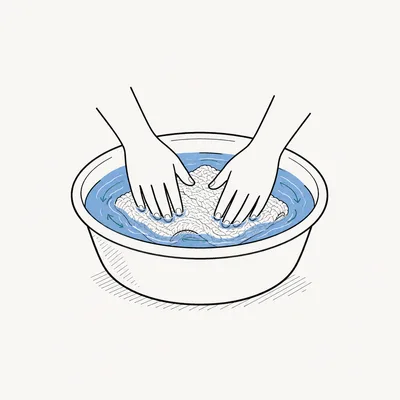
Press the knitpiece below the water surface with flat hands and move it only slightly in the water. Kneading or pulling is not necessary. Then rinse it carefully with clear water at roughly the same temperature.
-
Step 04
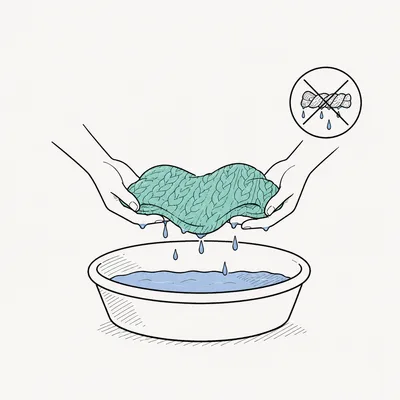
Always lift the wet knitpiece out of the water with both hands, fully supported. Do not pull it up by sleeves or edges, as the heavy, damp stitches can distort. Gently press out excess water with both hands or press the knitpiece lightly against the bottom of the sink without wringing or twisting it.


Drying properly
Drying your knitpiece the right way
After washing, lay your knitpiece flat on a dry towel, roll both up loosely and press gently. The towel absorbs a large part of the moisture without stressing the shape of the knitpiece.
Then use a dry towel or another absorbent surface on which you lay your knitpiece flat and bring it back into its original shape. Gently shape sleeves, hems, cuffs and neckline with your hands without pulling or stretching the material.

Flat drying
Because wet knitwear is heavy, it should not dry on a hanger or clothes line. The weight can distort the stitches and permanently pull the knitpiece out of shape. Let it dry in a well-ventilated place and avoid direct sunlight, radiators and other strong heat sources. Too much heat can dry out, harden or shrink the fibres. If the surface becomes very damp after a while, you can replace it and carefully turn the knitpiece. You should generally avoid the tumble dryer. Heat and movement can heavily stress the fibres and cause the knitpiece to shrink, felt or lose its shape.
Restoring shape with steam
Even between washes, a little steam can help smooth light creases, refresh the fibres and balance minor shape changes. It is best to use a steamer and keep it at a sufficient distance from the material. Do not touch the knitpiece with the hot steam plate and do not direct steam at the same spot for a long time.
While the fibres are slightly relaxed by the steam, you can gently shape hems, cuffs or sleeves with your hands. Then let the knitpiece cool flat and dry completely so the shape can stabilise.
Always check the care label first, as not every material may be treated with steam. For especially delicate fibres or colours it is also advisable to test the treatment cautiously on an inconspicuous area first.

